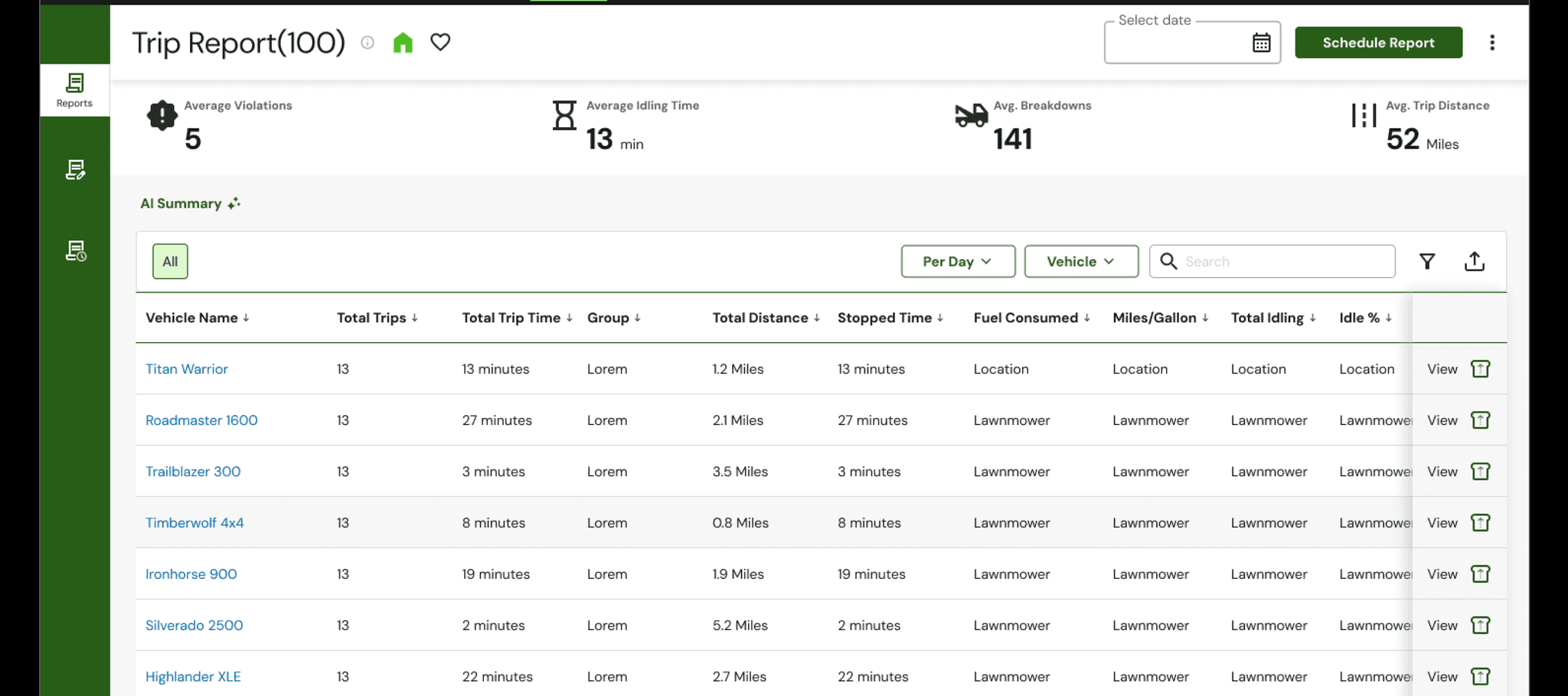
Reporting Redesign

Highlight

−50% report exports, +45% time on reports & +20% overall platform engagement

Problem

Reporting was a data dump, broken usability, no structure, Fleet owners exporting everything to Excel just to make sense of it.

Hidden Insight

The Hidden Insight 10 user interviews (6 external, 4 internal) revealed users weren't just pulling reports they were seeking business answers: spotting gaps, comparing timelines, identifying problem vehicles, deciding what to do next.

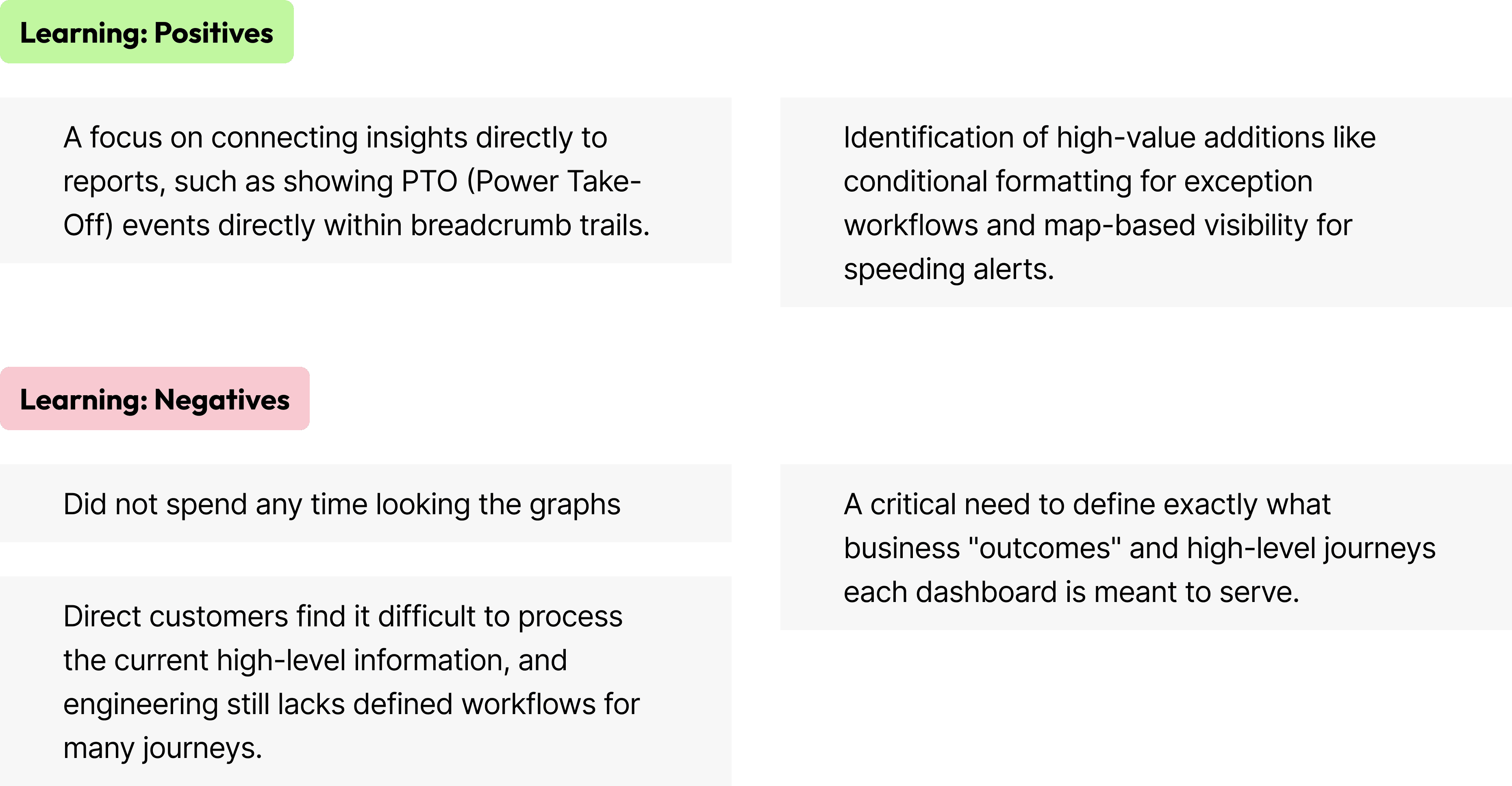
First Attempt = Failed!! Added data visualisation graphs above reports based on user requests. User testing showed nobody looked at the graphs. Reports wasn't the right place for pattern exploration.

Solution

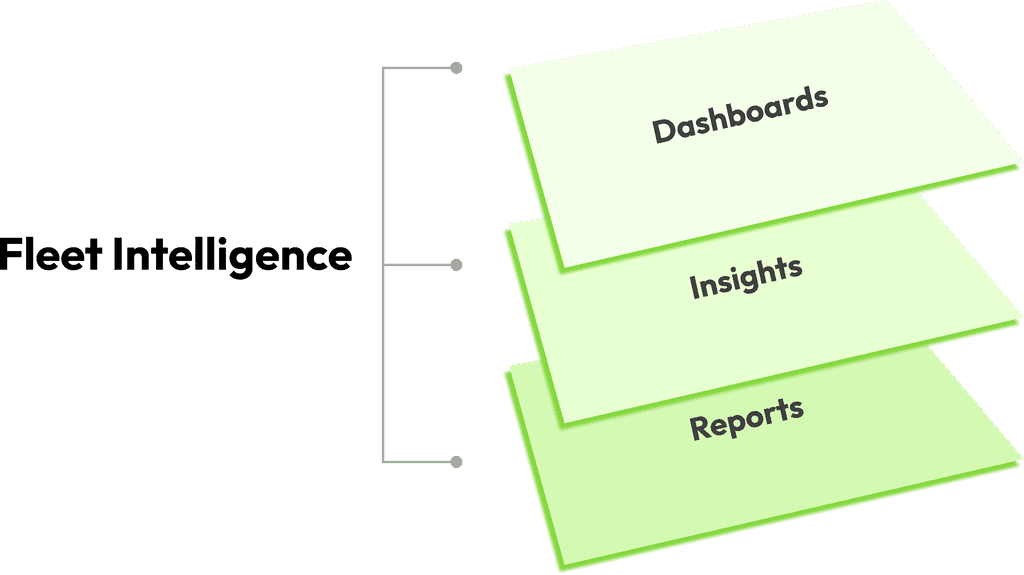
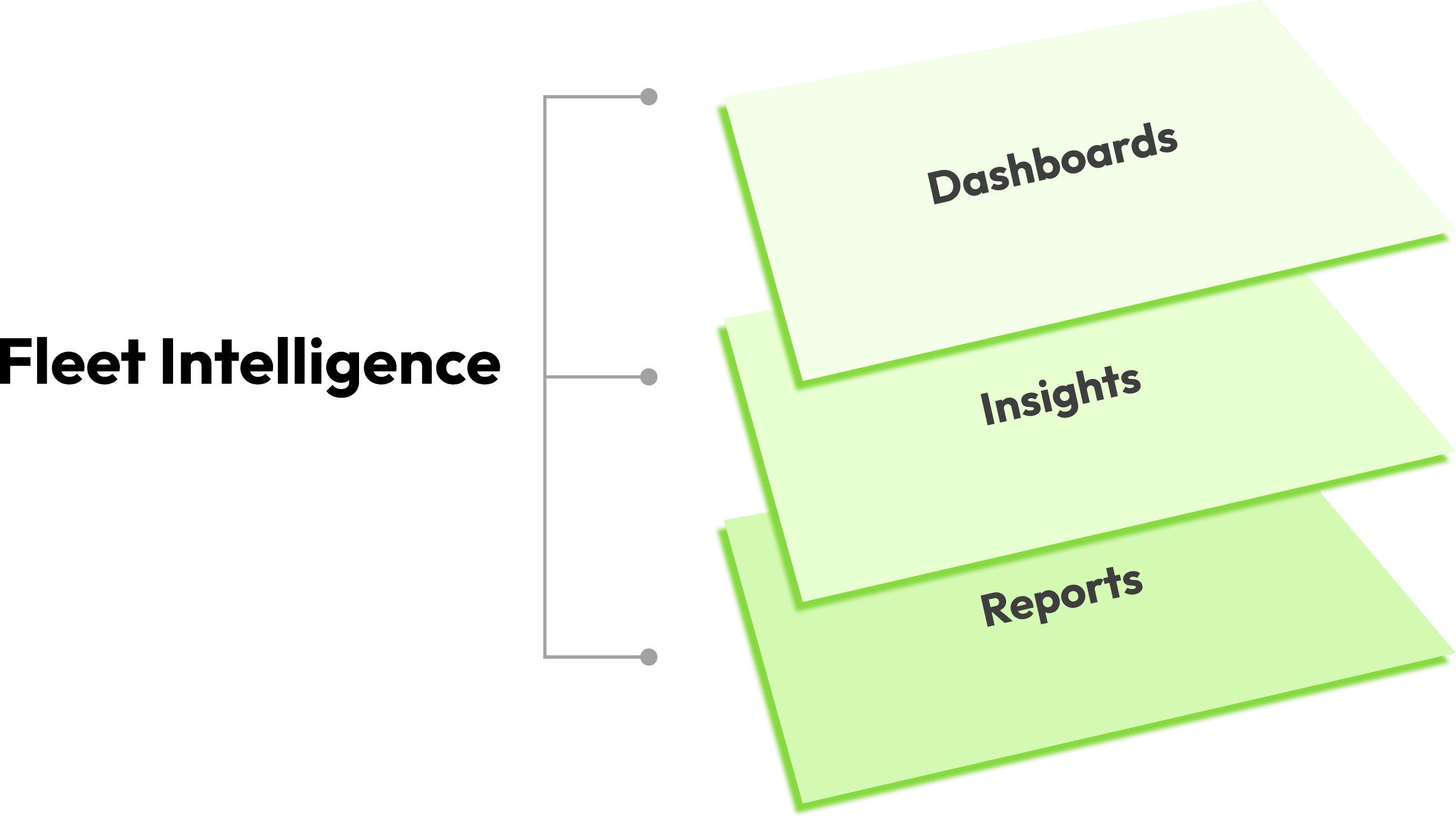
Reporting wasn't one problem, it was three distinct jobs:

  • Reports - deep customisation, everything they did in Excel, now inside the platform

  • Insights - one topic, explored fully with rich graphs and drill-downs

  • Dashboards - high-level patterns and problem areas at a glance

Date

Jan, 2026
Watch the summary video to skip reading.

Watch the summary video to skip reading.

Initial Ask

Initial Ask

The product had many legacy reports that users found difficult to navigate and interpret.
The initial request was to redesign the reporting UI.

The product had many legacy reports that users found difficult to navigate and interpret.
The initial request was to redesign the reporting UI.

Started talking to people who use this everyday

Started talking to people who use this everyday

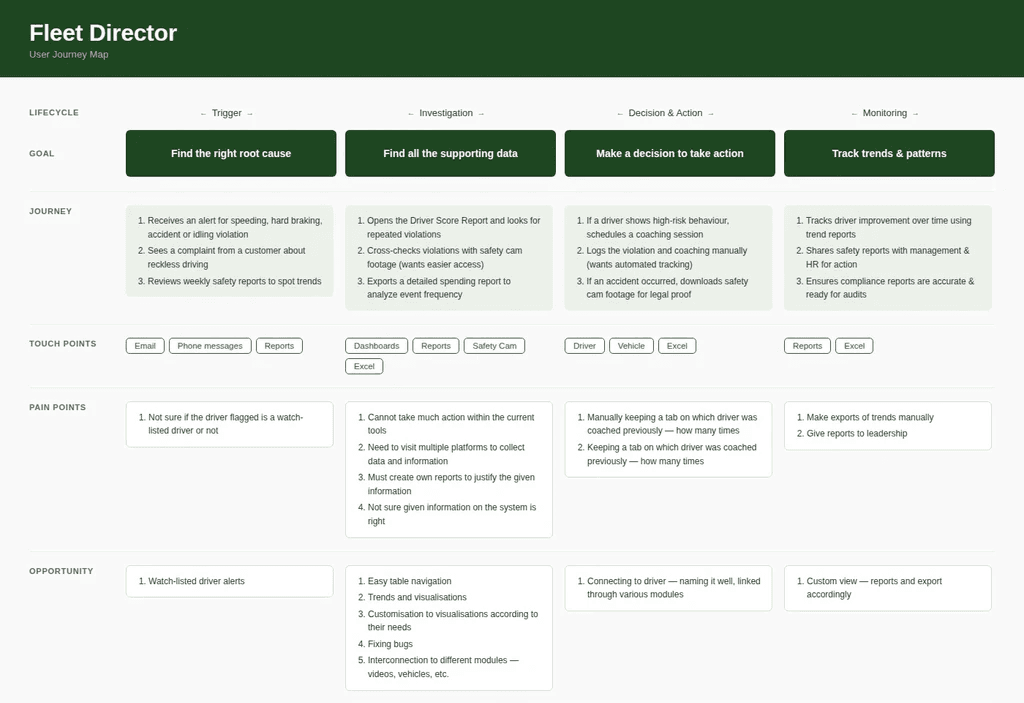
6 Fleet directors

6 Fleet operators/managers
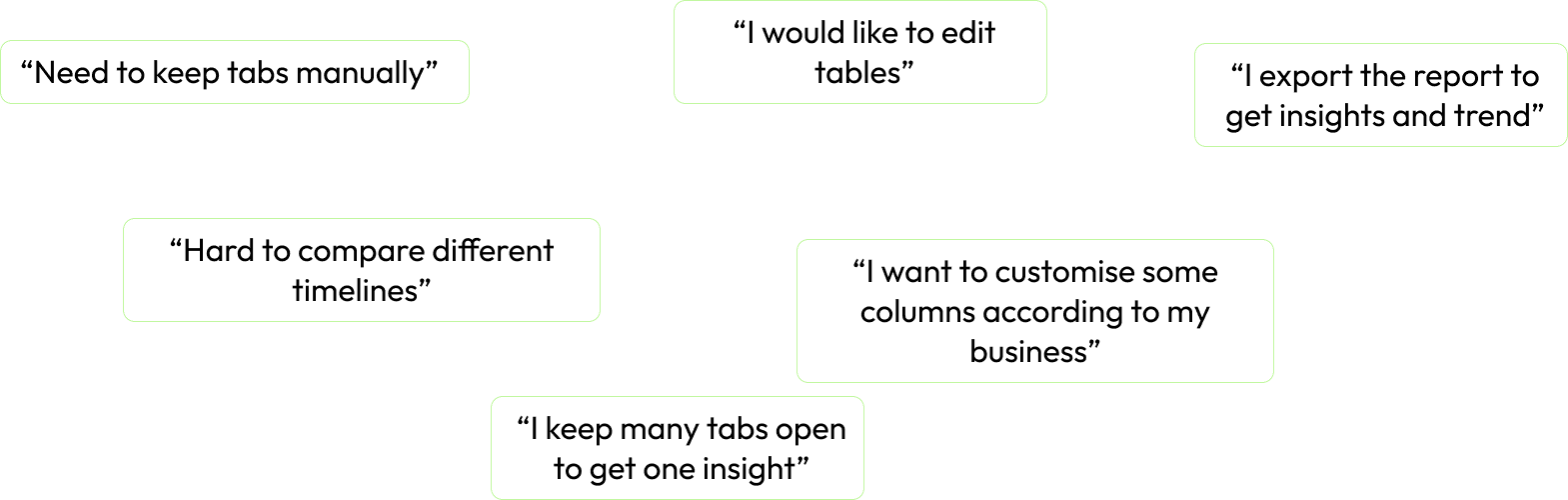
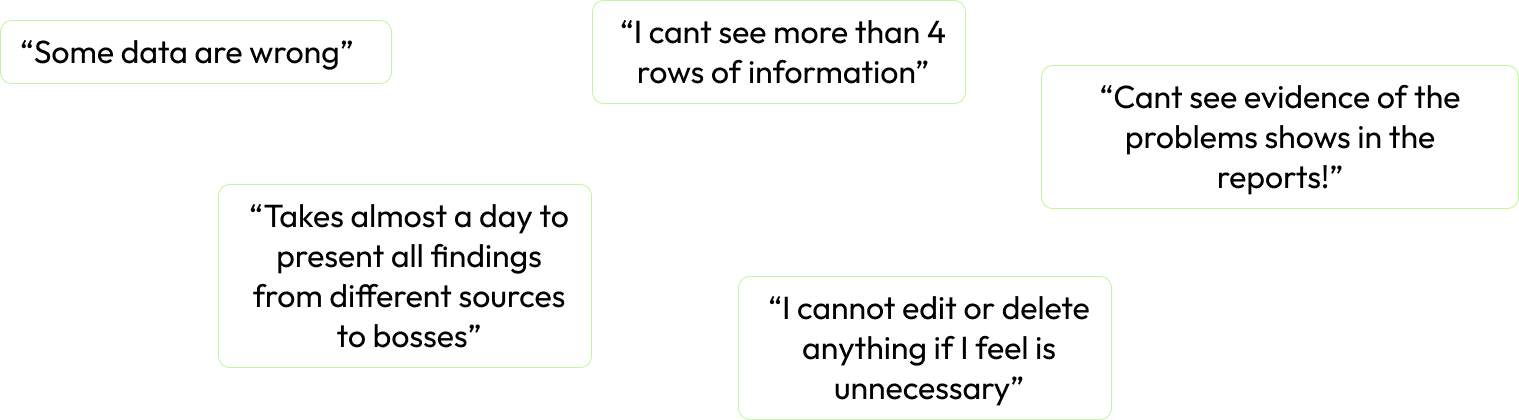
Fleet directors said

Fleet directors said

Fleet operations said

Fleet operations said

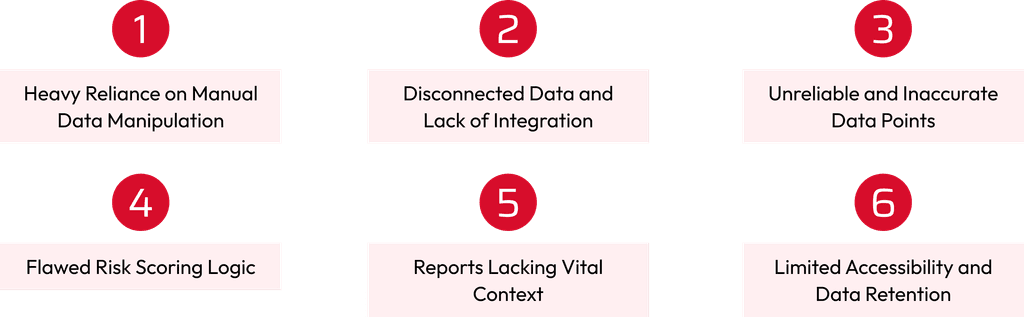
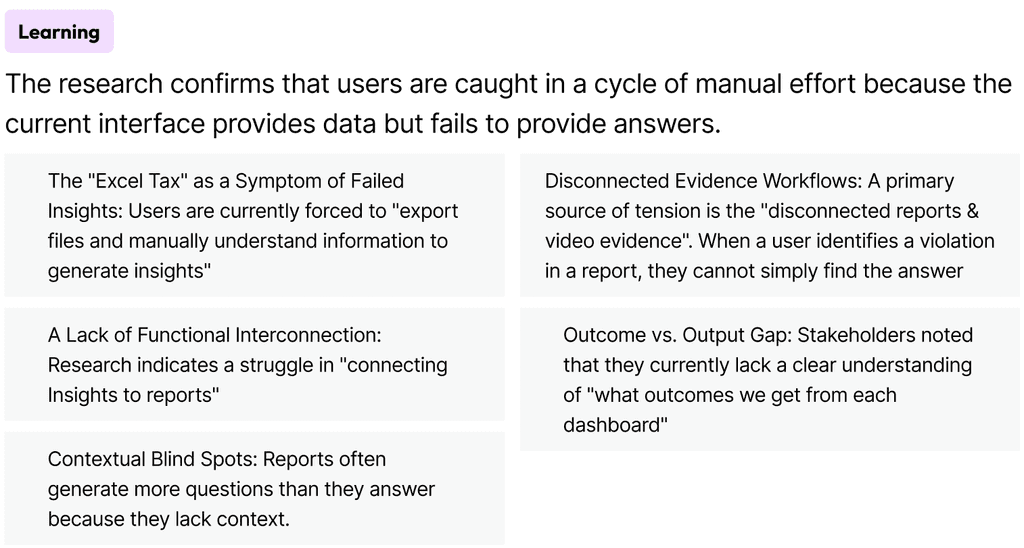
Key problems users felt:

Key problems users felt:

Exploring how fleets use reporting

Exploring how fleets use reporting

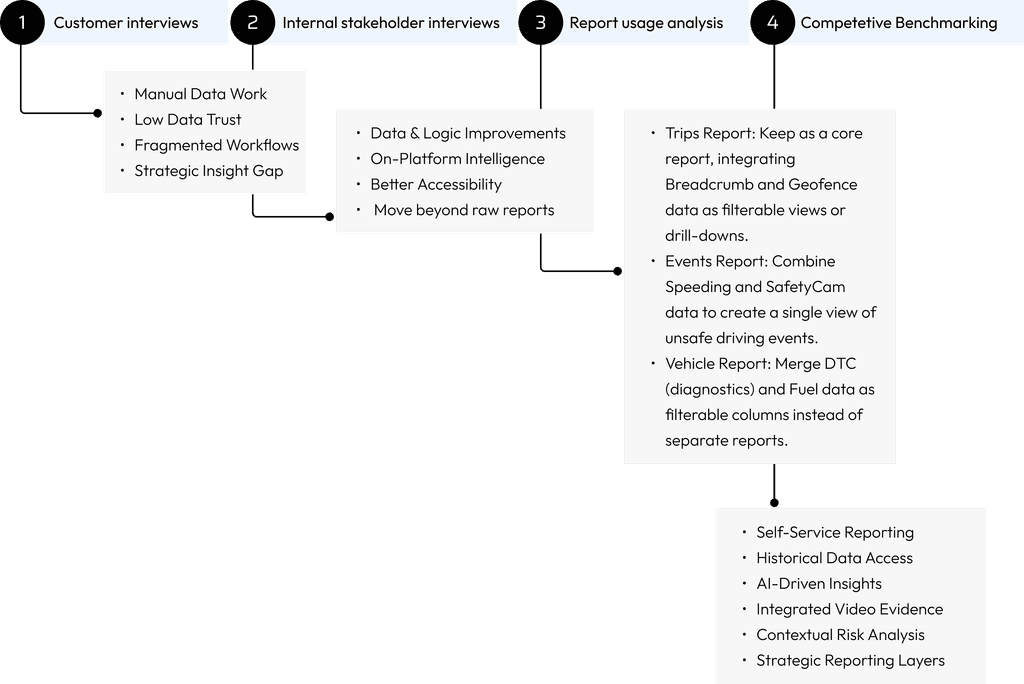
Methods used

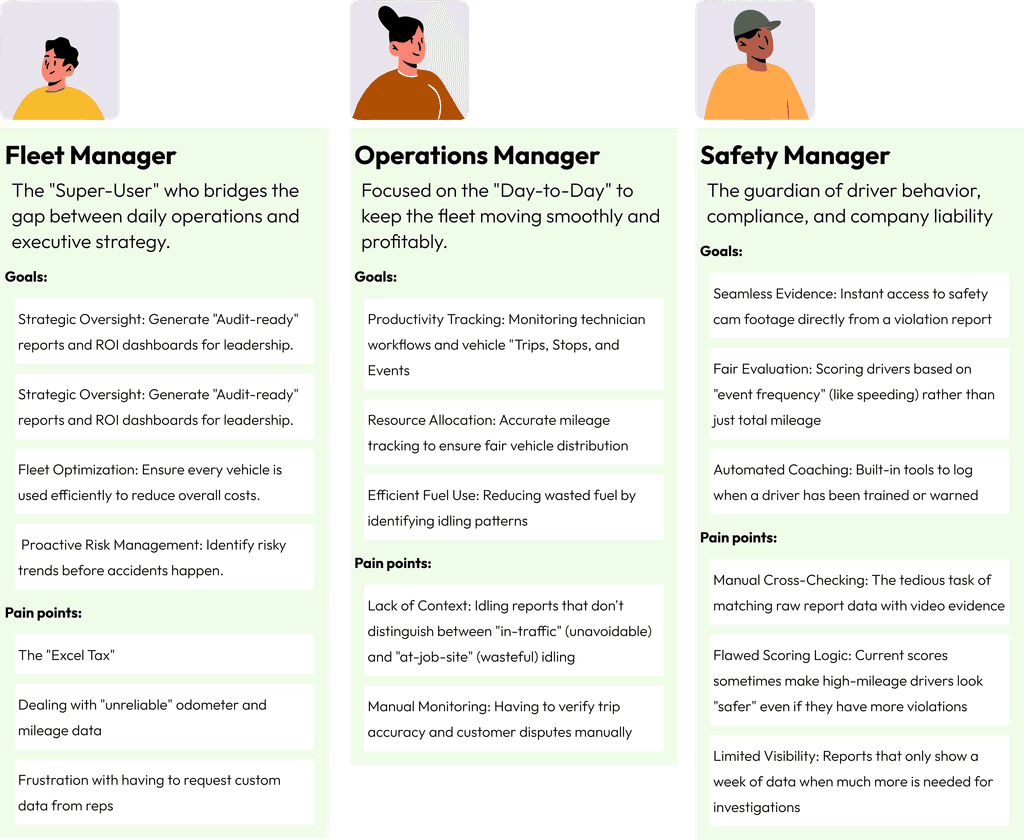
Who uses fleet?

Who uses fleet?

Fleet leadership workflow involved dealing with high level trends and patterns.
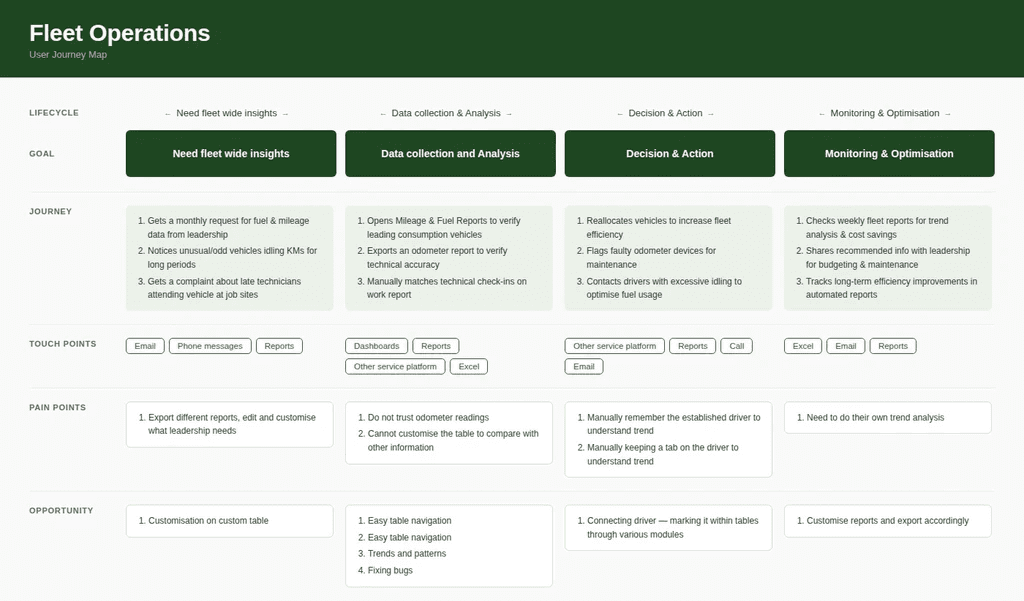
Fleet operations workflow involved dealing with smallest level details and data, digging their way up.
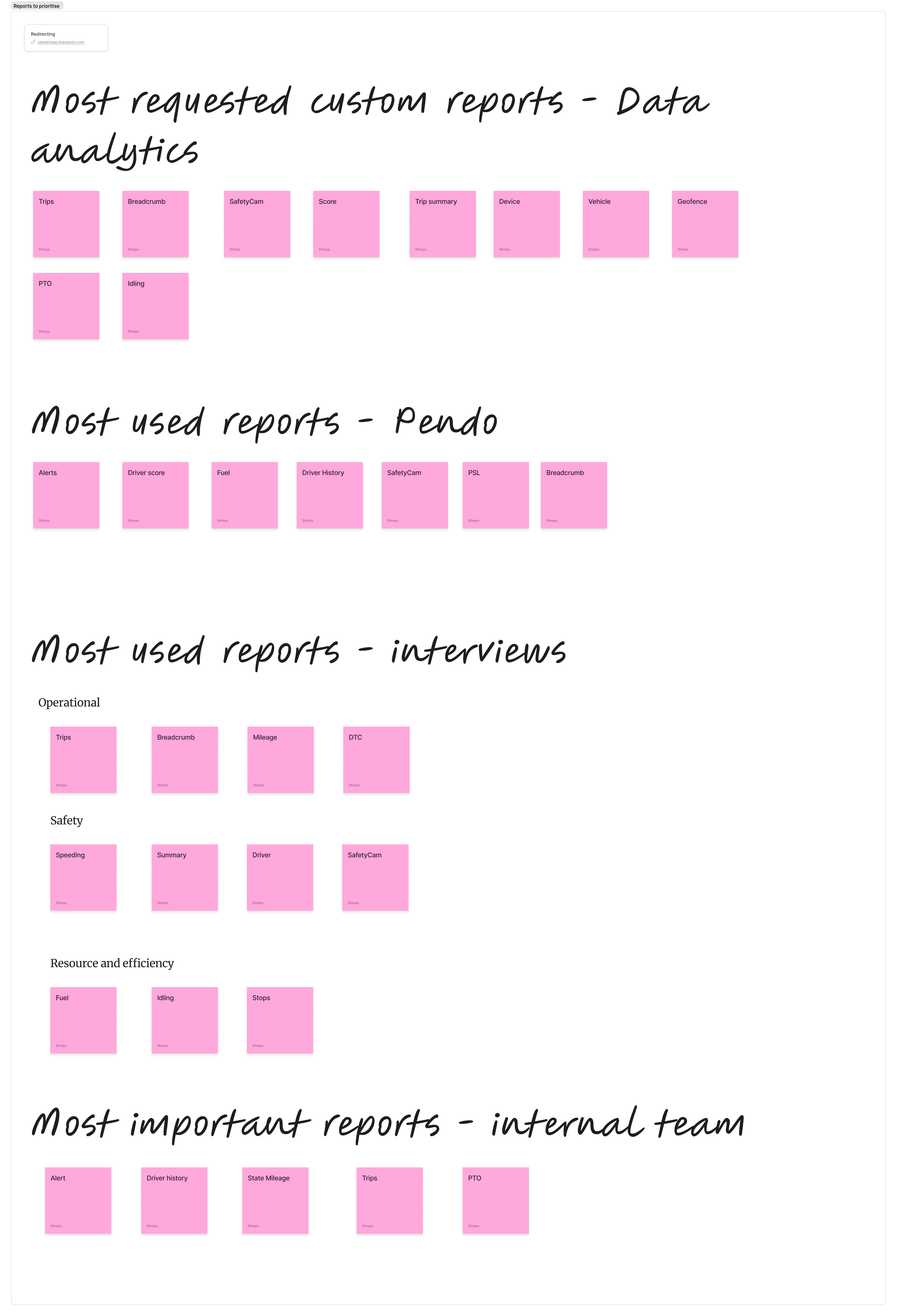
Collected usage patterns from various sources and then prioritised it with the team
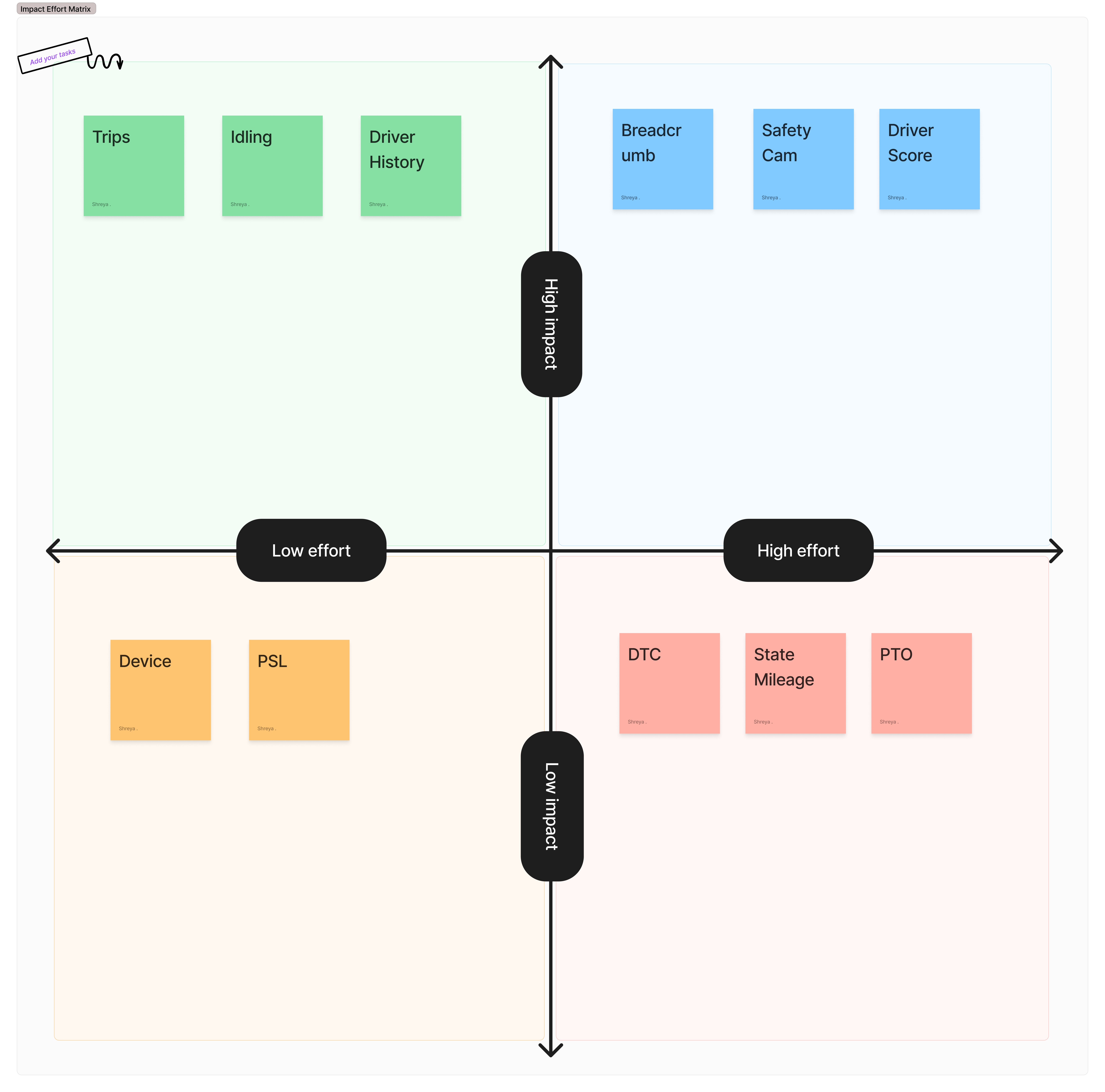
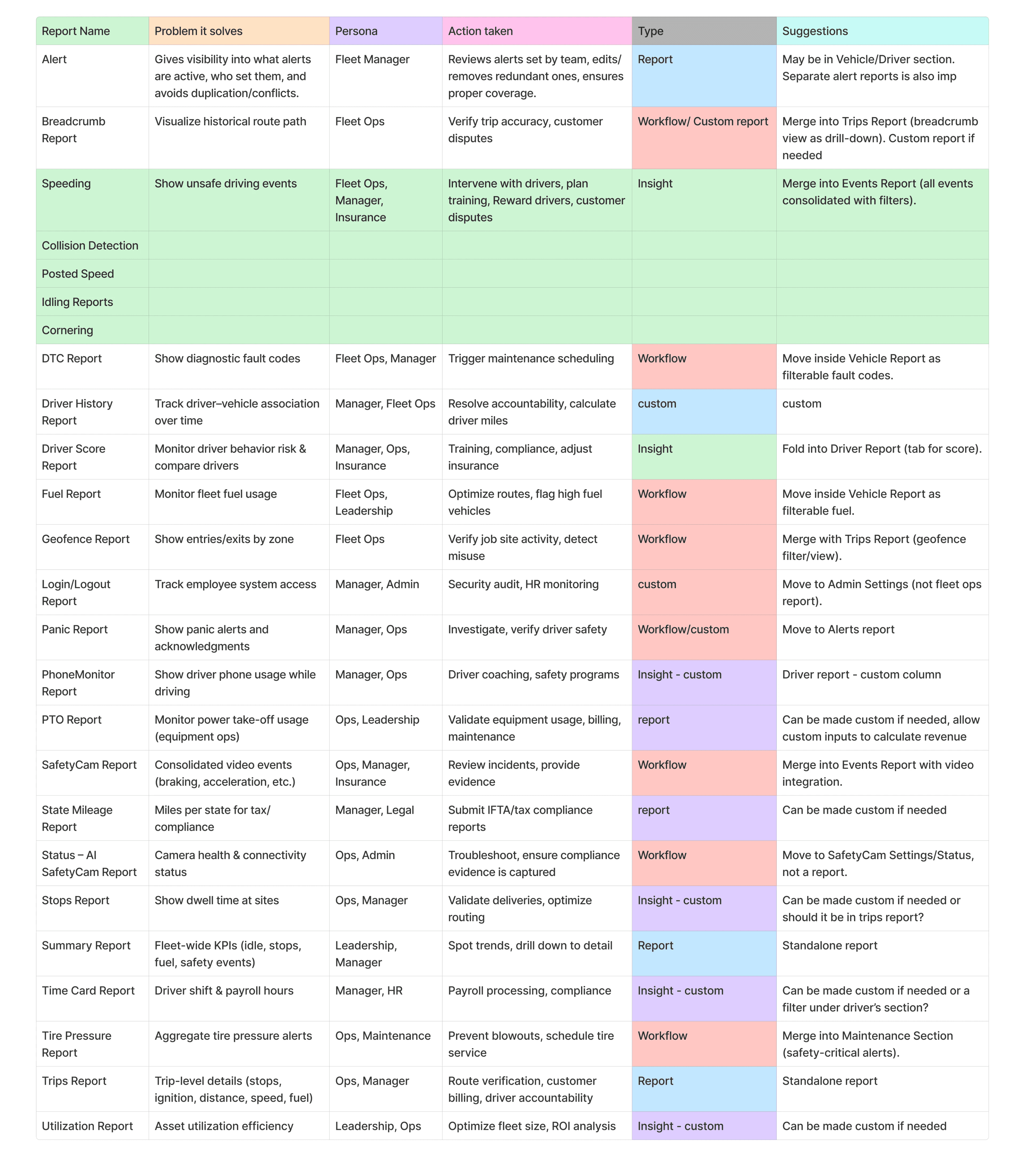
Mapping the reporting ecosystem

Mapping the reporting ecosystem

Workflow

Workflow

Insight

Insight

Report

Report

Custom

Custom

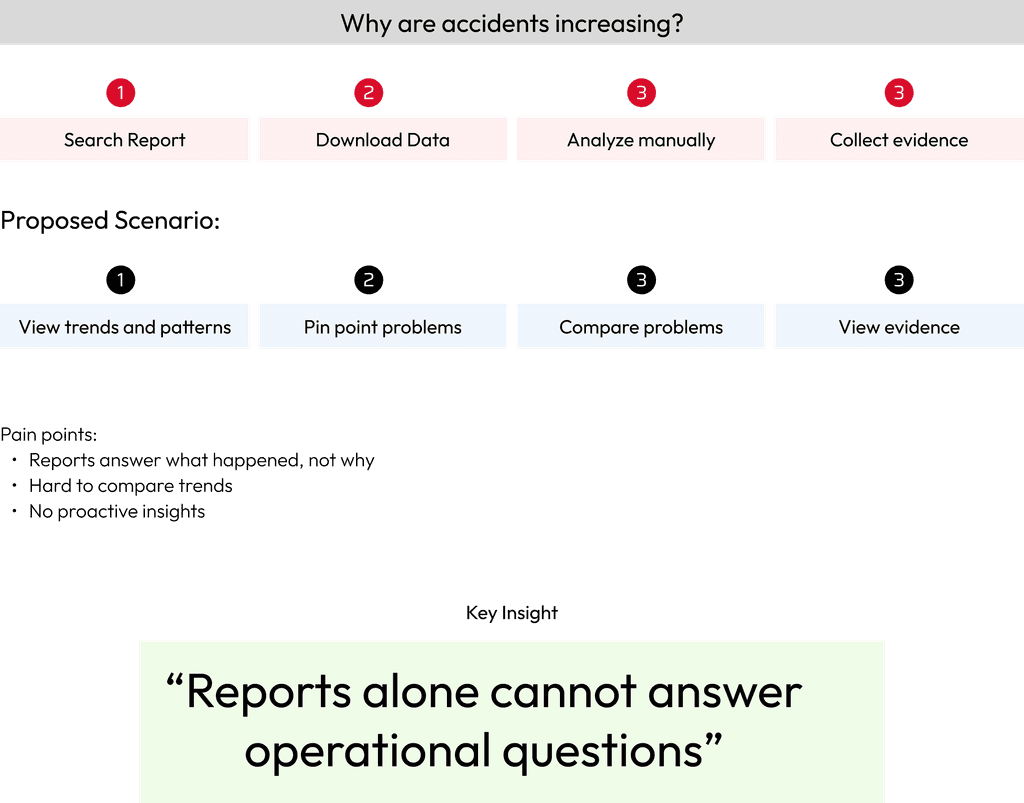
Old user journey

Old user journey

Example Scenario:

Users need three different levels of intelligence

Users need three different levels of intelligence

What we prioritised first?

What we prioritised first?


  • Core reports retained (Azuga)

  • New insights layer introduced (Safety IQ)

  • Dashboards integrated (SafetyIQ)


  • Core reports retained (Azuga)

  • New insights layer introduced (Safety IQ)

  • Dashboards integrated (SafetyIQ)

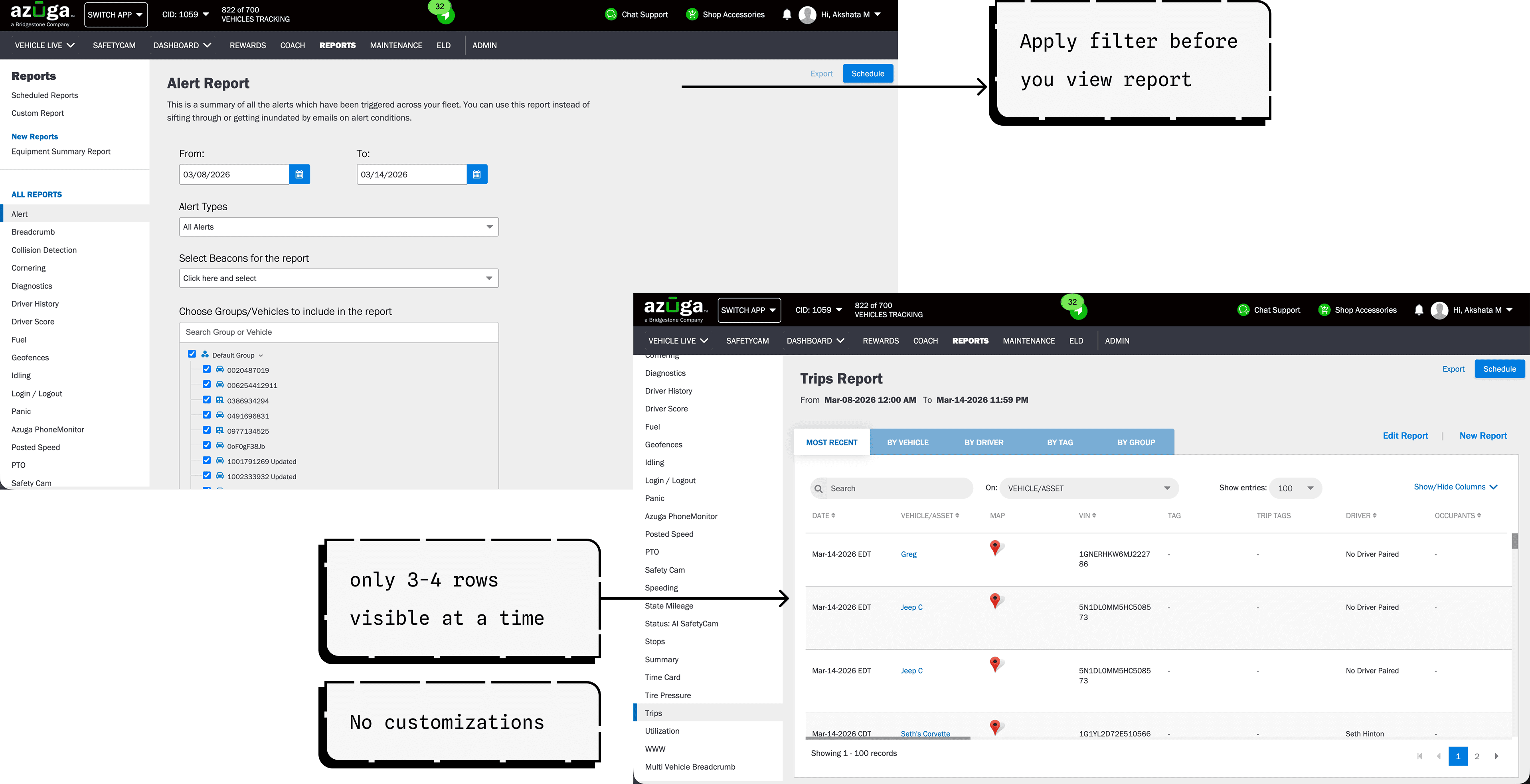
Legacy Screens

Legacy Screens

What we prioritised first?

What we prioritised first?


  • Core reports retained (Azuga)

  • New insights layer introduced (Safety IQ)

  • Dashboards integrated (SafetyIQ)


  • Core reports retained (Azuga)

  • New insights layer introduced (Safety IQ)

  • Dashboards integrated (SafetyIQ)

Legacy Screens

Legacy Screens

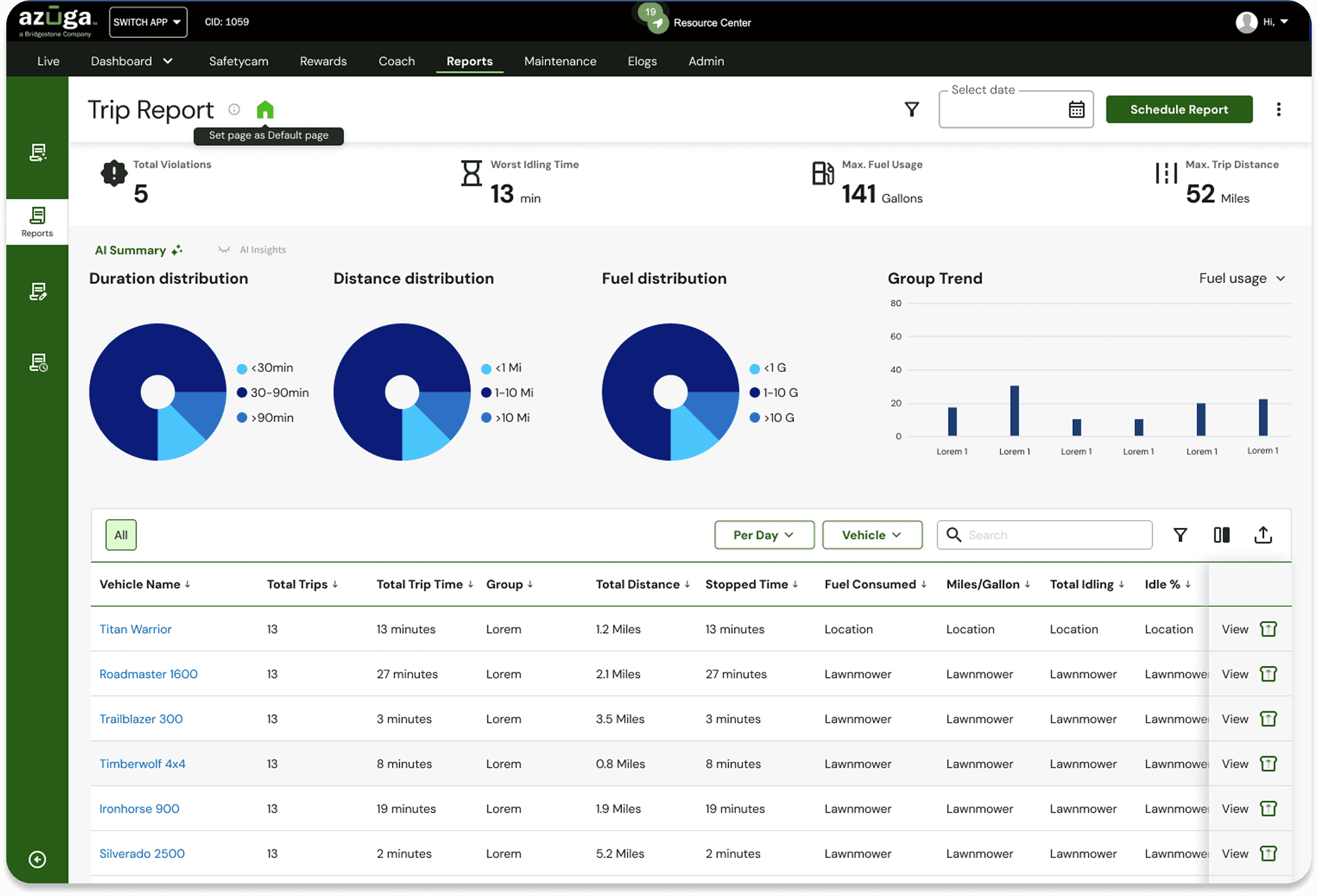
First Draft of Reports Design

First Draft of Reports Design

Tested first draft screens with a few users to gauge if we are going in the right direction
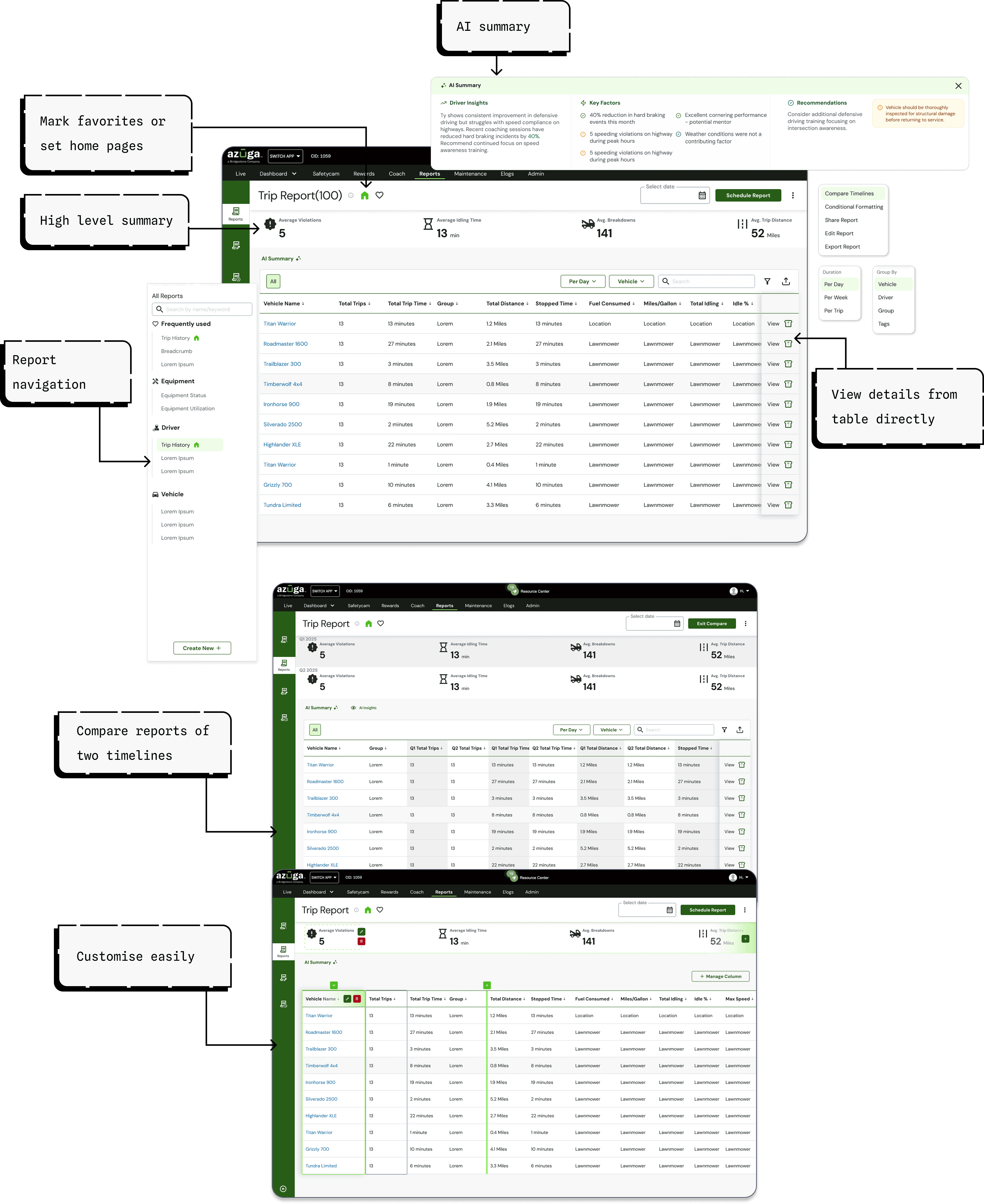
Final Screens

Final Screens

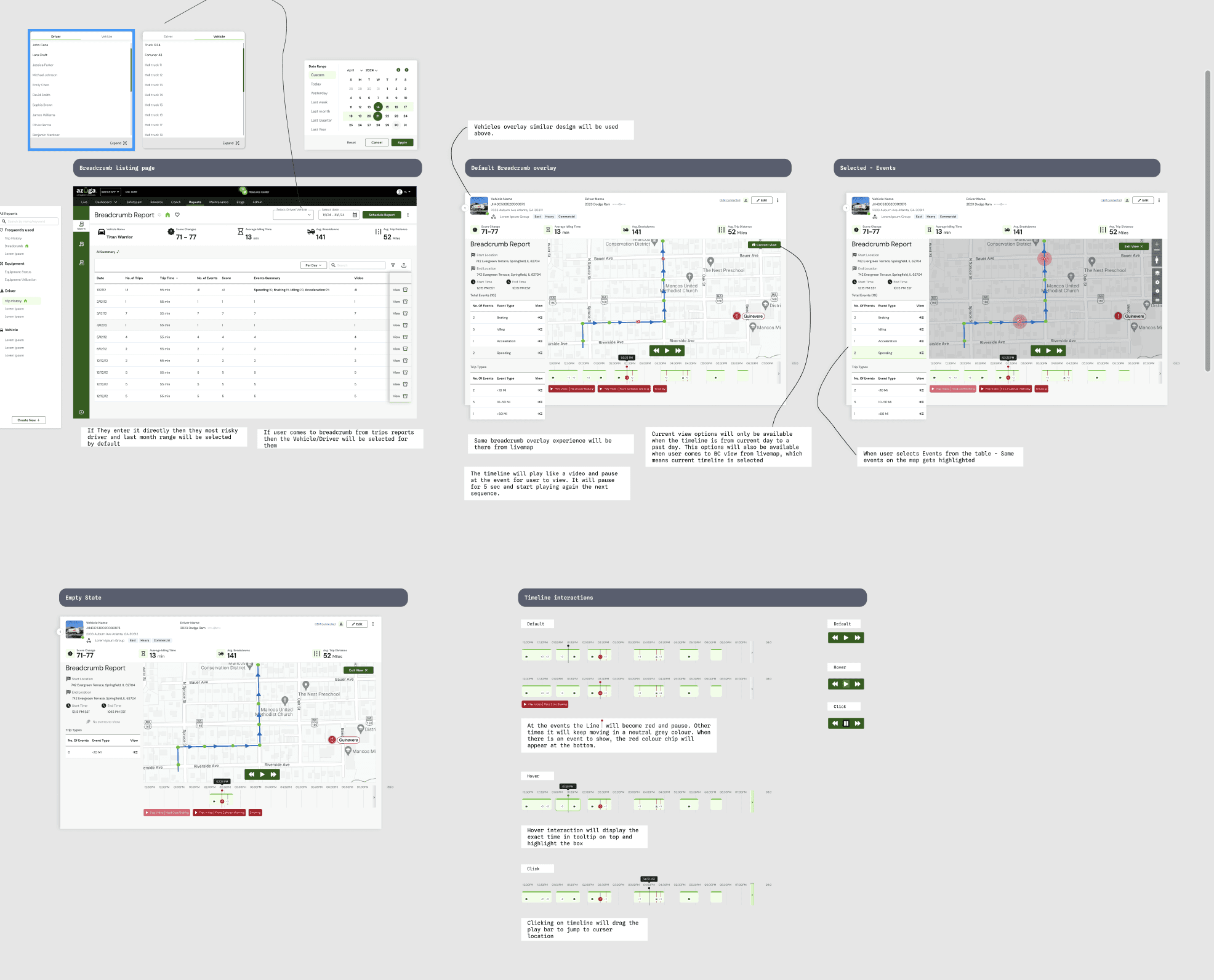
Breadcrumb, Trips, Summary & PTO Reoprts are in the build

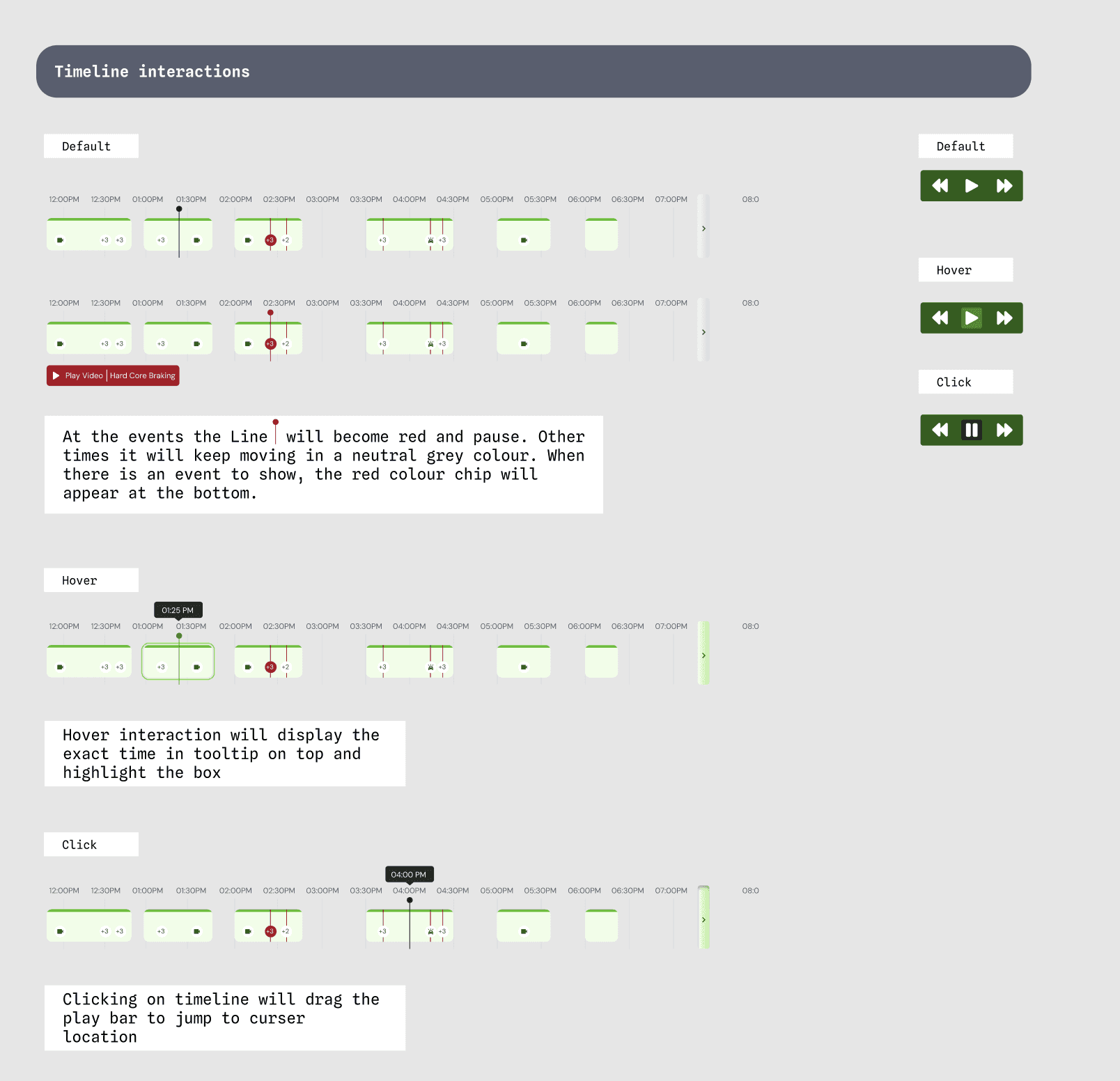
Snippets of Dev handoff
Legacy Screens

Legacy Screens

Were we successful?

Were we successful?


  • Pendo reports show ~50% lesser click on export button on Breadcrumb report tested for 1 month. This meant user did not feel necessary to customise it on excel, hence they ended up spending approximately 60 minutes/week (45%) more time on Azuga platform.

  • Redesigning Reports created a ripple effect, as data visibility improved, engagement lifted across interconnected features, contributing to a 20% increase in overall platform time spent across 50% of existing users.


  • Pendo reports show ~50% lesser click on export button on Breadcrumb report tested for 1 month. This meant user did not feel necessary to customise it on excel, hence they ended up spending approximately 60 minutes/week (45%) more time on Azuga platform.

  • Redesigning Reports created a ripple effect, as data visibility improved, engagement lifted across interconnected features, contributing to a 20% increase in overall platform time spent across 50% of existing users.

Looking Ahead

Looking Ahead

The next measure of success isn't time spent- it's decisions made. We have 20 more reports to be designed in this year. And then we will take the next step in measuring value.

  1. Decision attribution - are users acting on what they see? Correlating report views with fleet decisions made within 48 hours.

  2. Insight-to-action rate - how often does a user move from Insights layer into an operational change in the platform.

Thank You